- Regularly clean bird baths with warm water, refresh water daily, and scrub every few days.
- Place baths in shaded areas, away from feeders, and consider non-porous materials like ceramic or resin.
- Avoid detergents or algae-prevention products; use a vinegar-water spray for stubborn algae.
Bird baths add beauty and excitement to gardens by drawing in cardinals, nuthatches, and other backyard birds. But if you don’t stay on top of maintenance, bird baths can develop unsightly algae and potentially pose a health hazard to the very birds you want to attract.
Here’s a look at why algae forms in bird baths, how it impacts bird health, and simple tips to get rid of algae and ensure baths are always safe for your favorite feathered friends.
Rachel Pidgen is the environmental stewardship and conservation coordinator at the Wye Marsh Wildlife Centre in Midland, Ontario.
Does Bird Bath Algae Harm Birds?
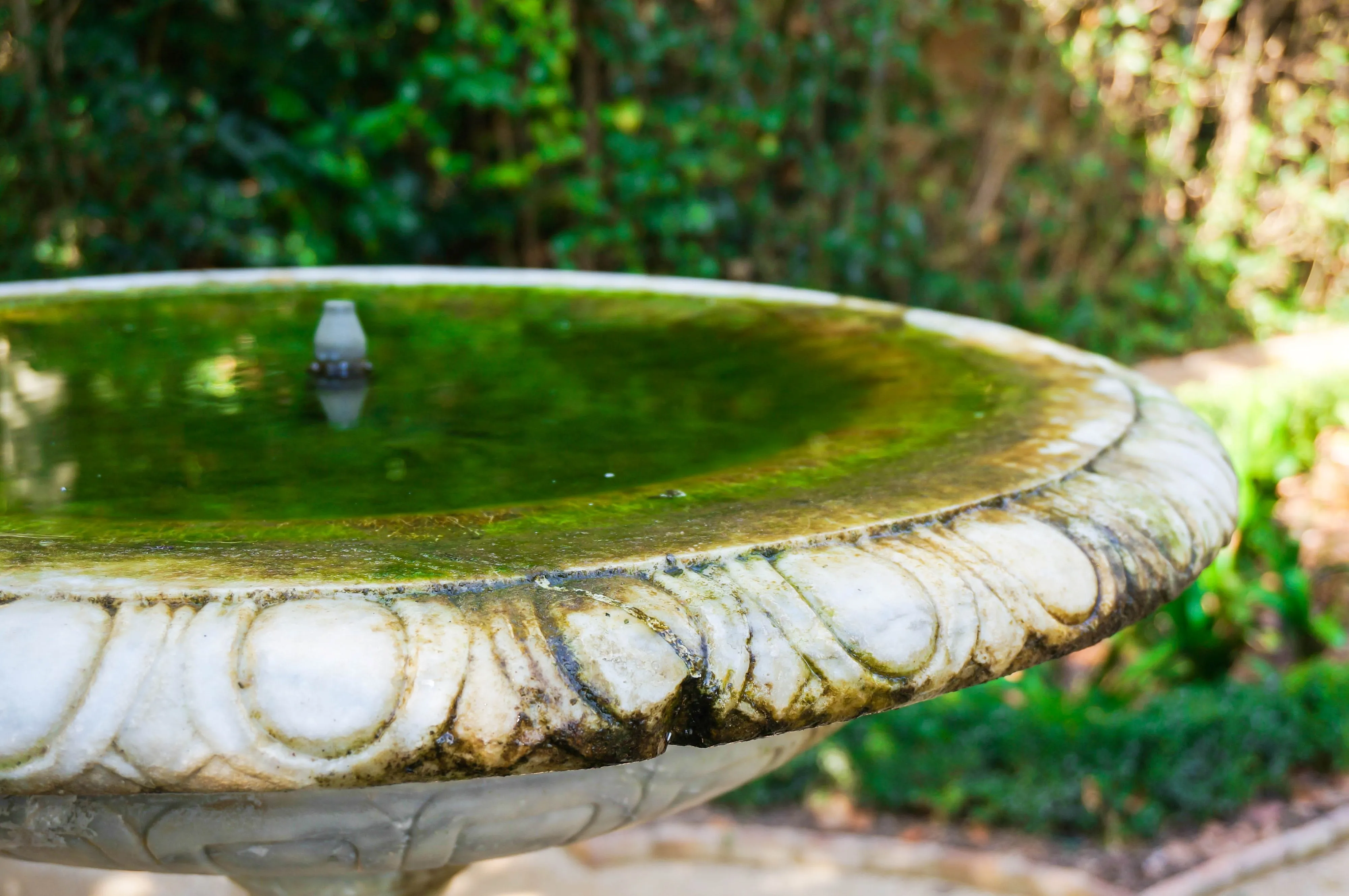
The common green algae that is most likely to occur in bird baths is typically non-toxic and doesn’t harm birds directly. However, the presence of algae may indicate that bird baths need more regular maintenance and that they may already be providing the perfect habitat for pathogens that pose much more serious health risks to birds than algae does.
Algae is most likely to occur in bird baths that are warm due to their exposure to bright sun and have an overabundance of nutrients from bird droppings, fallen leaves, and spilled bird seed. But this environment doesn’t just promote algae blooms. It also provides the exact conditions that encourage the growth of parasites and bacteria like trichomoniasis and salmonella, which can prove fatal to any bird that stops by for a drink.
Cleaning bird baths regularly is the single best way to stay on top of algae problems and reduce the risk of bacterial growth and other issues. Not to mention, regular maintenance makes baths more pleasing to the eye and easier to maintain in the long run. Best of all, birds are more likely to visit baths that are sparkling clean and filled with a ready source of fresh water.
Related
How to Prevent Algae in Bird Baths
Algae can be a real hassle to deal with if it’s allowed to build up in bird baths, so it’s better to prevent algae from forming in the first place.
Keep the Bird Bath Clean
If you want to stay on top of algae issues and ensure bird baths stay safe for birds, the most important thing you can do is stick to a regular cleaning routine.
“Definitely clean water sources daily and sterilize them regularly,” advises Rachel Pidgen, environmental stewardship and conservation coordinator at the Wye Marsh Wildlife Centre in Midland, Ontario. “Bird baths are high-risk areas for avian influenza and other diseases.”
During warm weather, bird bath water should be emptied and refreshed daily. Baths should be cleaned more vigorously every few days to keep algae from settling in. Concrete and stone baths are more porous and should be scrubbed thoroughly with a stiff wire brush to keep algae from growing, while resin and ceramic baths should be cleaned with a soft brush or cloth to avoid scratches.
Experts recommend avoiding products intended to prevent algae growth, as their effects on wildlife have not been well studied. Instead, simply scrub baths with warm water only and don’t use any detergents or cleaning products like bleach, which can be toxic to birds.
Swapping out bird baths that are made of porous materials like concrete or stone for ones made of ceramic or resin and adding a small solar-powered fountain or bubbler can also make bird baths easier to clean, reduce algae blooms, and make mosquitoes less likely to visit as well.
Select the Right Spot
Regularly cleaning baths in this manner should be enough to prevent major algae issues. However, if you want to be doubly sure that your bird bath doesn’t develop algae, you may also want to reconsider its placement in your garden.
“Positioning bird baths in a spot with afternoon shade can keep the water from overheating or becoming too overgrown with algae,” explains Pidgen.
Aside from sun exposure, it’s also a good idea to locate bird baths away from bird feeders so seeds are less likely to be tracked into the water.
How to Remove Stubborn Algae
Bird baths that are made of porous materials or that aren’t cleaned regularly may develop a thick coating of algae that’s challenging to treat. But with a bit of elbow grease and some clever tricks, you can get rid of the most stubborn bird bath algae without breaking a sweat.
To start, completely drain your bird bath and then scrub it thoroughly with a brush or cloth that’s suitable for the material your bird bath is made of. Just use warm water and don’t apply any detergents or cleaning products while you work.
If scrubbing alone isn’t enough to dislodge the algae, place the drained bird bath in a sunny section of your yard and allow it to bake in the UV light of the sun for a few hours to kill stubborn algae. Alternatively, you can also destroy algae by spraying the bath with a mixture of 1 part distilled white vinegar and 9 parts water. Then, let the vinegar spray sit for 5 minutes before washing all traces of the vinegar away with your hose.
Frequently Asked Questions
- Is it safe to put vinegar in a bird bath?
Distilled white vinegar is safe to use in bird baths as long as you completely rinse it away after cleaning so it doesn’t damage delicate bird feathers.
- Can you use baking soda to clean bird baths?
Baking soda is a mild abrasive that can be used to clean bird baths and algae as long as you completely rinse away all residue after cleaning.
- <span>Gardening</span>
- <span>Garden Design</span>
- <span>Birdhouses & Birdbaths</span>