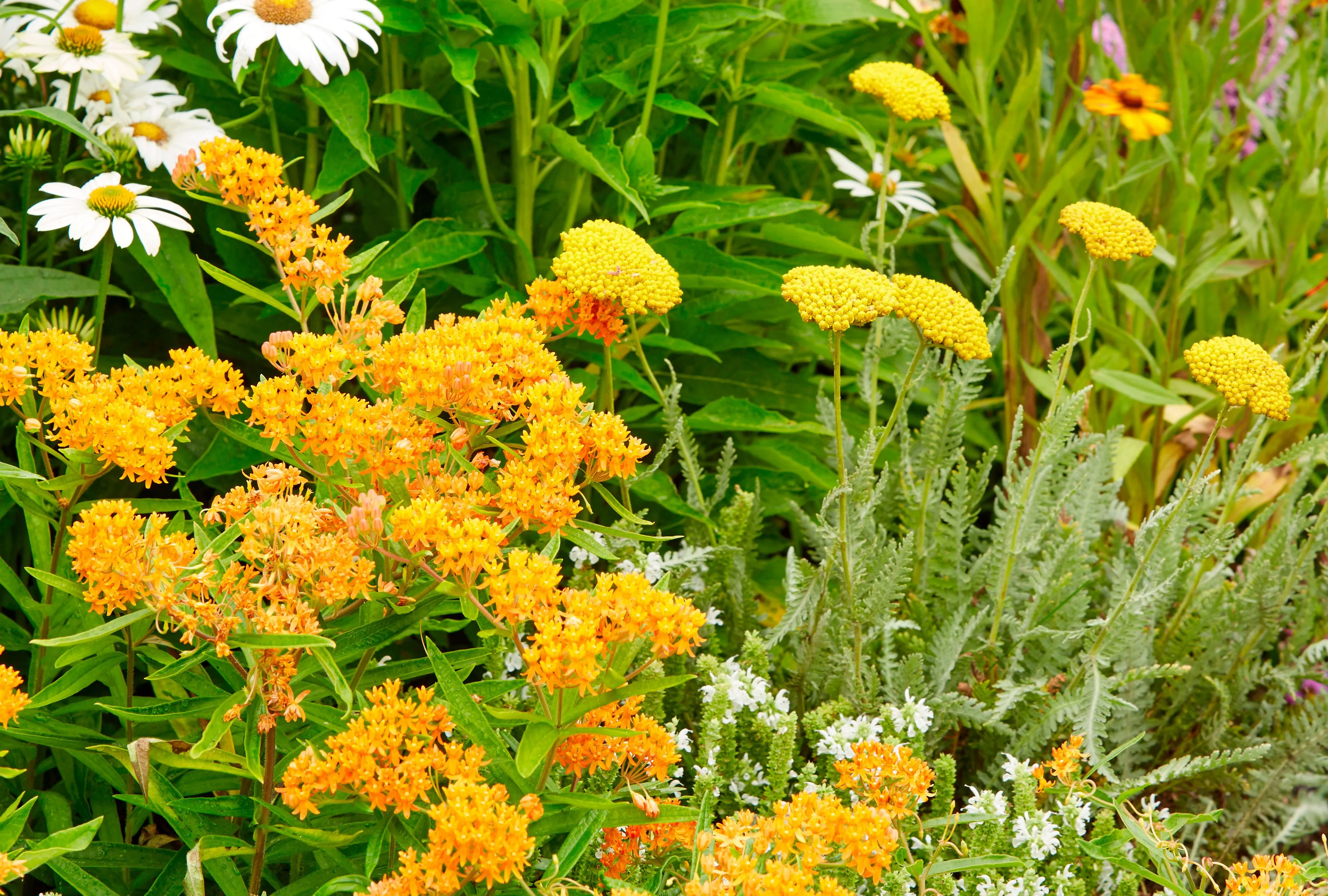
- Replacing a lawn with native, low-water plants requires planning; document every step for rebates and future reference.
- Small plants take time to mature, so structural plants like agave or trees can provide visual interest while the garden fills.
- Lawn removal reduces maintenance and fosters biodiversity.
Last year, a good decade into living with our front lawn, my family decided to smother it and plant a proper garden. We’d never loved the look of it—especially come summer, when like many homeowners in drought-prone California, we’d let it go brown—but had been frozen by indecision over what to plant in its place.
After years of interviewing landscape designers and homeowners about their own decision to swap turf for a more vibrant and eco-friendly landscape of native and pollinator-friendly plants—and picking up smart design tips about how to pull that off—I decided to make the leap. Here’s what I learned, and how it’s going a year later.
1. Document Everything
When we were converting the lawn last fall—a process that involved sheet mulching, laying out new irrigation, and finally planting—we were so focused on getting it done, we forgot to capture certain parts of the process. Our first big mistake.
For one, in order to receive a rebate from our local water company for replacing the lawn with low-water plants, they required photos of every step. (After much back and forth, they did wind up accepting the few shots I’d managed to take.) For another, taking a picture of the irrigation tubes before they were covered in mulch would have saved us time digging around whenever we decided to add a line over the past year.
Another mistake? Not saving every last plant tag. When we started out, I made a spreadsheet of what we planned to plant, but didn’t track some of the last-minute swaps made at the nursery. Now I have a yarrow that I love and want to buy a buddy for, but am struggling to figure out exactly which cultivar it is.
2. Patience Pays
To keep costs down, we installed mostly small plants (save for the few mature ones I scored from my neighbors—more on that later). That meant for the first year, and especially the first winter, we were looking at a lot of mulch. But then this spring, the catmint started popping up and covering the sea of brown. Though it will take a few years for a new garden to hit its stride, the wait is worth it.
3. Structure for the Win
Every garden looks better with a balance of shapes and textures, but structural plants are especially important while you’re waiting for everything else to grow in. On a whim, I added a few large agave I scored from my local Buy Nothing group and spaced them throughout the garden last year. Their large, sculptural shapes have saved the day, along with the pomegranate tree we’d planted a few years earlier. These plants provide visual anchors as we wait for the flowering perennials and ornamental grasses to fill in and knit together.
Related
4. Expect to Edit
I agonized over the garden plan before I put plants in the ground, attempting to stick to a tight list chosen for four-season interest and a cohesive palette. Still, I’ve not loved all my choices. As plants grew in this spring, I started noticing imbalances in color or texture. Some plants, such as the perennial geranium I chose, don’t seem to add much to the mix and may end up getting moved elsewhere. One plant inexplicably died, leaving a hole in the landscape.
Despite my carefully laid plans, I’ve still needed to rearrange and fill in a bit and I’m guessing I’ll keep making tweaks over time. (But such is the joy of gardening!)
5. The Rewards Will Exceed Expectations
Countless homeowners and designers have told me this in interviews, so it shouldn’t have been a surprise. But getting rid of the lawn has been even more rewarding than expected. We’re giving away the lawnmower. We no longer fret over the weeds that were overtaking the turf (our thick layers of cardboard, soil, and mulch seem to have paid off—only tiny, easy-to-pull weeds occasionally pop up around the bases of plants). Best of all, every time we walk out the front door, we’re greeted not by a lawn to be dealt with, but a changing tapestry of plants and a happy family of bees, butterflies, and other pollinators.
- <span>Gardening</span>
- <span>Garden Design</span>
- <span>Garden Projects</span>